


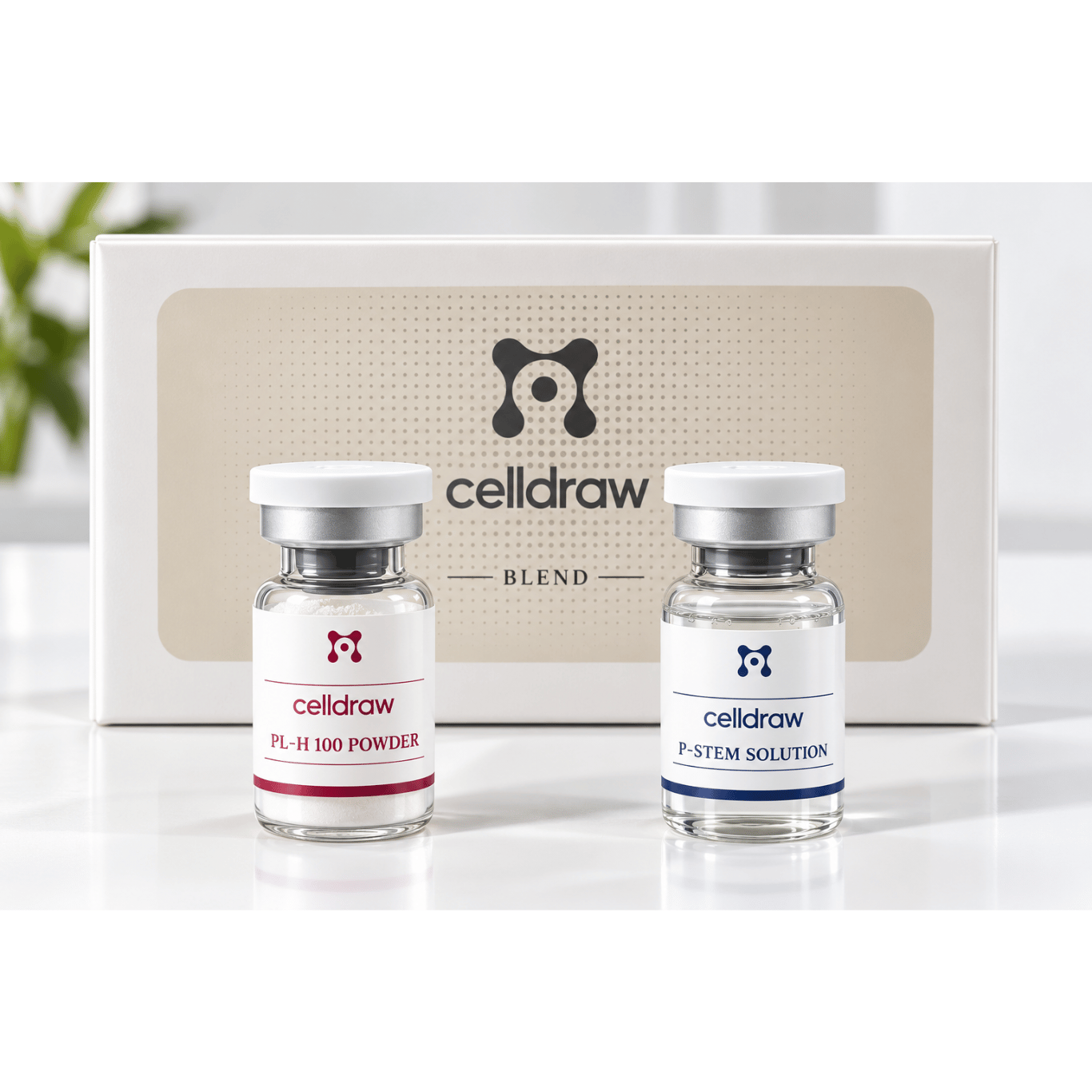

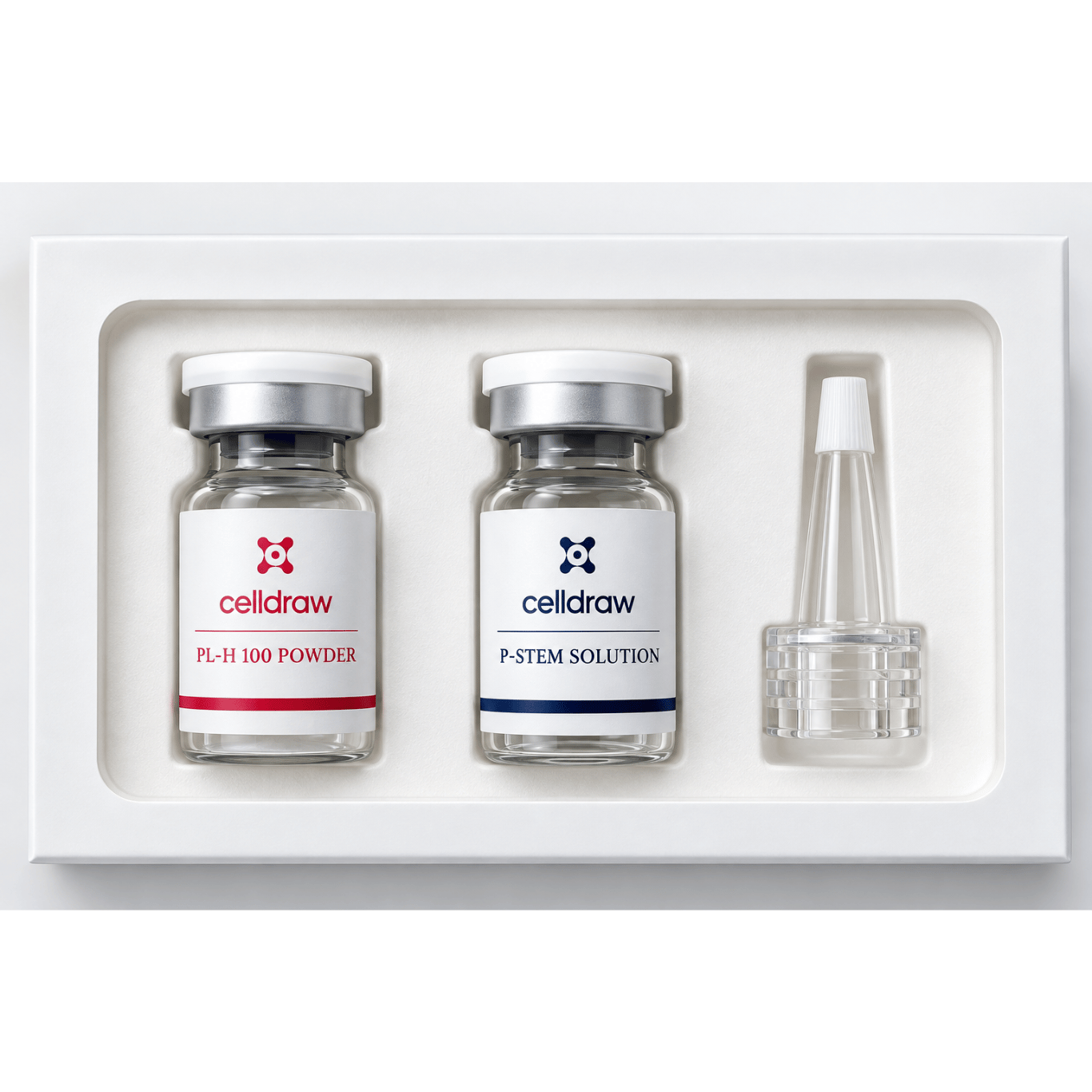



PLLA + HA Biostimulator (1 x 5ml Solution Vial + 1 x 100mg Vial)
Professional Collagen Biostimulator
PL-H 100 — PLLA + HA Biostimulator Powder
Advanced Collagen Induction • Gradual Volume Restoration • Long-Term Dermal Remodeling
PL-H 100 is an advanced professional biostimulator combining Poly-L-Lactic Acid (PLLA) with Hyaluronic Acid (HA) for progressive collagen induction, dermal-density improvement, and natural-looking volume restoration.
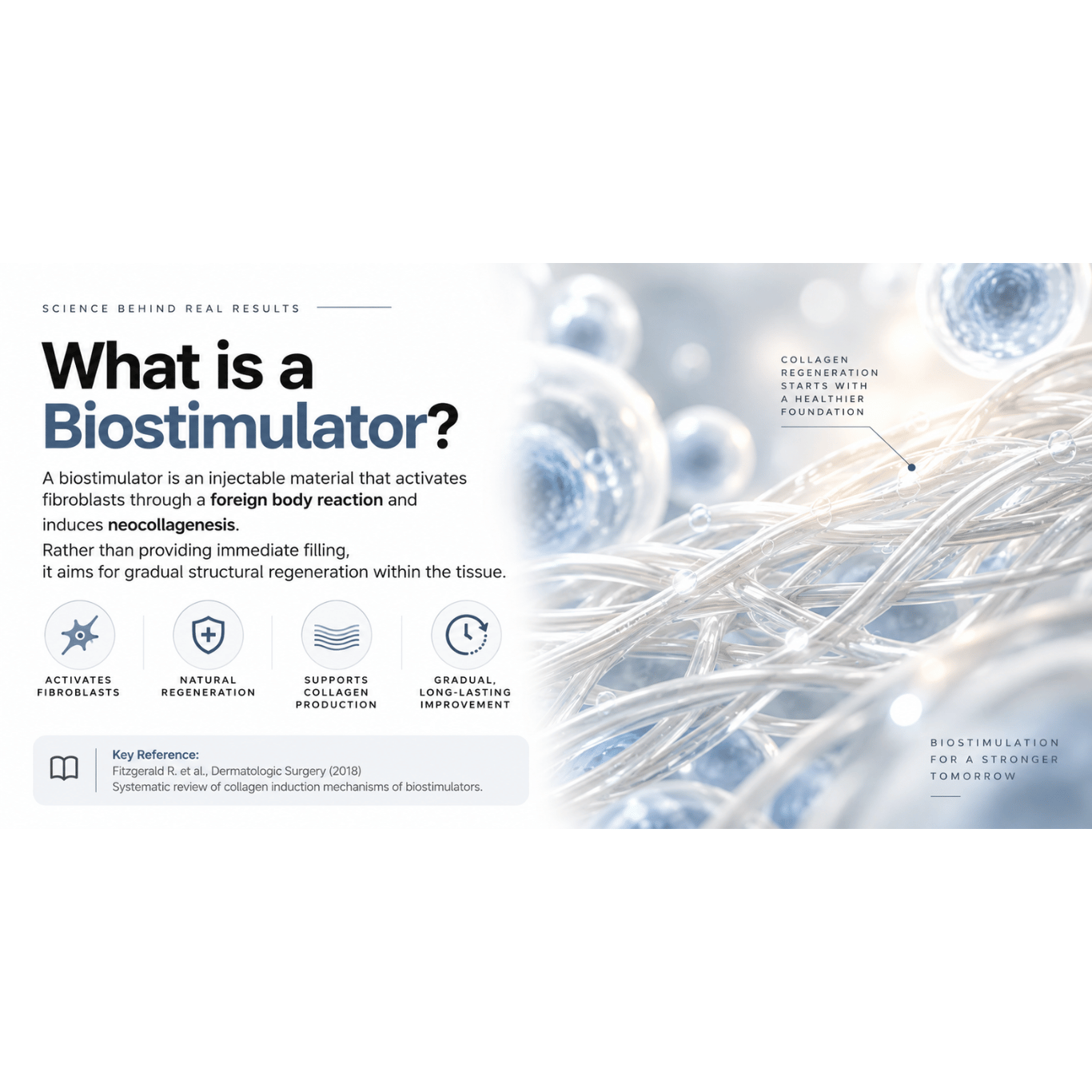
Rather than functioning solely as an immediate volumizing material, PLLA is designed around a regenerative mechanism. Biodegradable polymer microparticles initiate a controlled tissue response that activates fibroblasts and supports neocollagenesis — the formation of new collagen within the tissue.
100 mg PLLA Polymer
PLLA + HA Composite Technology
18–24 Months Documented Degradation Profile
Type I Primary Collagen Profile
The Science of Progressive Collagen Remodeling
PLLA is a biodegradable synthetic polymer with a semi-crystalline molecular structure. This structural characteristic contributes to slower hydrolysis, allowing the polymer to degrade gradually while supporting sustained collagen stimulation.
The documented degradation period for PLLA is approximately 18–24 months, supporting a gradual treatment profile designed around progressive tissue remodeling rather than abrupt volumization.
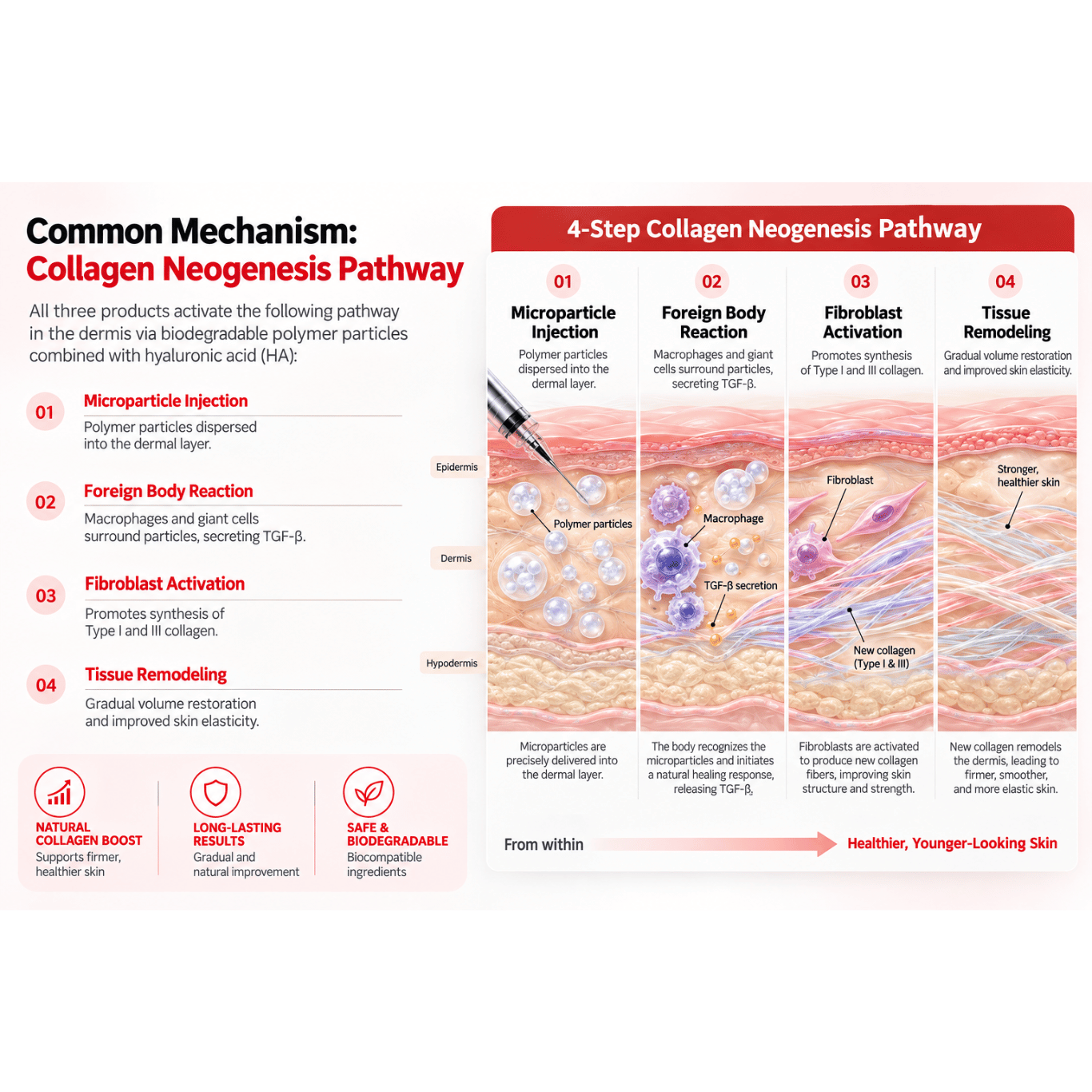
PLLA Collagen-Neogenesis Pathway
Microparticle Dispersion → Controlled Foreign-Body Response → Fibroblast Activation → New Collagen Formation → Tissue Remodeling
PLLA + HA Dual-Action Technology
PL-H 100 combines PLLA polymer technology with Hyaluronic Acid, creating a complementary biostimulator platform.
Within the formulation, HA serves as more than a hydration component. It functions as a delivery matrix for the polymer particles, supporting their distribution within the treatment area.
The HA matrix provides an initial hydration environment, helps reduce particle aggregation for more uniform collagen induction, and creates an extracellular-matrix-like environment that supports cellular migration and proliferation.
Key Professional Benefits
Long-Term Collagen Stimulation
The semi-crystalline structure of PLLA supports slow hydrolysis and sustained tissue stimulation across an approximately 18–24 month degradation period.
Type I Collagen Induction
The documented PLLA pathway involves TGF-β1 signaling, fibroblast activation, and primarily Type I collagen synthesis.
Progressive Dermal Density
Designed to support gradual improvement in dermal density through continued collagen remodeling.
Natural-Looking Volume Restoration
Progressive collagen formation provides an approach to volume restoration that develops gradually as tissue remodeling occurs.
Broad-Area Rejuvenation
Particularly positioned for broader treatment areas where gradual volume restoration and dermal-density improvement are desired.
HA-Enhanced Distribution
Hyaluronic Acid supports hydration and assists with more uniform dispersion of PLLA particles within the treatment matrix.
Professional Treatment Positioning
PL-H 100 is positioned for patients requiring gradual volume restoration and broad-area dermal-density improvement.
The product's technical selection guide specifically identifies areas such as the cheeks and temples as examples where this gradual, long-term collagen remodeling profile may be selected by the treating professional.
Scientific Profile
The technical documentation cites histological research reporting a 66.5% increase in Type I collagen density following PLLA injection.
PLLA is also described in the technical documentation as a well-established collagen-stimulating material supported by more than 30 years of clinical data.
| Technology | PLLA + HA Biostimulator |
|---|---|
| Polymer | Poly-L-Lactic Acid (PLLA) |
| Polymer Content | 100 mg |
| Polymer Structure | Semi-crystalline |
| Degradation Profile | Approximately 18–24 months |
| Primary Collagen Profile | Type I Collagen |
| Effect Profile | Gradual |
| Primary Positioning | Long-term dermal-density improvement and natural volume restoration |
*For Professionals only*
If you already possess a Dermafirm professional account, please log in to view the "Add to Cart" button and proceed to checkout.
If you have not yet registered, you can create a professional account by clicking the "Register Here" button below.

Professional Treatment Protocol
How to Use PL-H 100
PL-H 100 is a professional PLLA + HA biostimulator intended for administration by appropriately trained and licensed medical professionals.
1
Professional Patient Assessment
Conduct a complete patient consultation and evaluate treatment history, facial anatomy, tissue condition, volume-loss pattern, treatment objectives, and overall suitability for a PLLA biostimulator procedure.
2
Select the Appropriate Treatment Area
PL-H 100 is positioned for treatment plans requiring gradual volume restoration and broad-area dermal-density improvement. The technical selection guide identifies areas such as the cheeks and temples as examples.
3
Prepare PL-H 100
Prepare and reconstitute the product according to the manufacturer's official Instructions for Use and the professional protocol applicable to PL-H 100.
4
Professional Administration
Administer the prepared formulation using the appropriate professional technique selected by the treating medical practitioner based on anatomy, treatment area, tissue characteristics, and the individualized treatment plan.
5
Progressive Collagen Remodeling
Following treatment, PLLA microparticles are designed to initiate a controlled tissue response that activates fibroblasts and promotes progressive collagen formation. The effect develops gradually as tissue remodeling occurs.
6
Professional Follow-Up
Evaluate the patient's response according to the individualized treatment plan and determine subsequent treatment or follow-up requirements based on clinical assessment.
Professional Administration The technical material supplied for PL-H 100 describes its composition, mechanism, degradation characteristics, and treatment positioning. Specific preparation volume, injection depth, needle or cannula selection, administration volume, treatment interval, and injection technique should follow the manufacturer's official Instructions for Use and the clinical judgment of the treating licensed medical professional.
Biostimulator Composition
PLLA + Hyaluronic Acid Technology
PL-H 100 combines 100 mg Poly-L-Lactic Acid (PLLA) with Hyaluronic Acid (HA) in a composite biostimulator platform.
Poly-L-Lactic Acid (PLLA)
PLLA is a biodegradable synthetic polymer characterized by a semi-crystalline molecular structure. This structure contributes to slower hydrolysis and gradual polymer degradation.
According to the technical documentation, PLLA has an approximately 18–24 month degradation period, supporting sustained tissue stimulation and progressive collagen remodeling.
PLLA microparticles initiate a controlled foreign-body response involving macrophages and giant cells. This process is associated with TGF-β1 signaling, fibroblast activation, and primarily Type I collagen synthesis.
Hyaluronic Acid (HA)
Hyaluronic Acid provides complementary hydration while functioning as a delivery matrix for the PLLA polymer particles.
Within the PLLA + HA composite structure, HA supports the initial hydration environment and helps prevent particle aggregation, contributing to more uniform particle distribution and collagen induction.
HA also provides an extracellular-matrix-like environment that supports cellular migration and proliferation during the tissue-remodeling process.
Composition Profile
| Primary Polymer | Poly-L-Lactic Acid (PLLA) |
|---|---|
| Polymer Content | 100 mg |
| Complementary Matrix | Hyaluronic Acid (HA) |
| Polymer Structure | Semi-crystalline |
| Primary Collagen Profile | Type I Collagen |
| Documented Degradation Profile | Approximately 18–24 months |
Composition Information The supplied technical documentation identifies the formulation as a 100 mg PLLA polymer + HA composite structure. A complete quantitative excipient formulation is not specified in the supplied technical material.